Walberswick Parish Council Response to Lionlink ‘Targeted Consultation’ - 29 July 2026
The document below has been submitted today (29th July) by Walberswick Parish Council (WPC) in response to the Lionlink “Targeted Consultation” launched on 7 July 2026. The WPC’s strong objection to NGV’s proposal for Lionlink (LL), submitted in February 2026 in response to the previous statutory consultation, remains the basis of this response.
Everyone is encouraged to submit their own responses to the consultation and are free to use any of the content below in doing so, but please do not just simply "copy & paste" the entire response as there are mechanisms to pick this up and it makes it much more likely that both responses will by ignored/not considered
For anyone wishing to submit their own response there is no formal feedback form for this consultation so you should just respond directly by email to: info@lionlink.nationalgrid.com
In the subject line please write: ‘Response to LionLink Targeted Consultation’ - it would also be appreciated (although not required) to copy WALL in, as they are trying to tally number of responses: info@wall-update.org
The closing date for responses is Wednesday 5th August
------------------------------------------------------
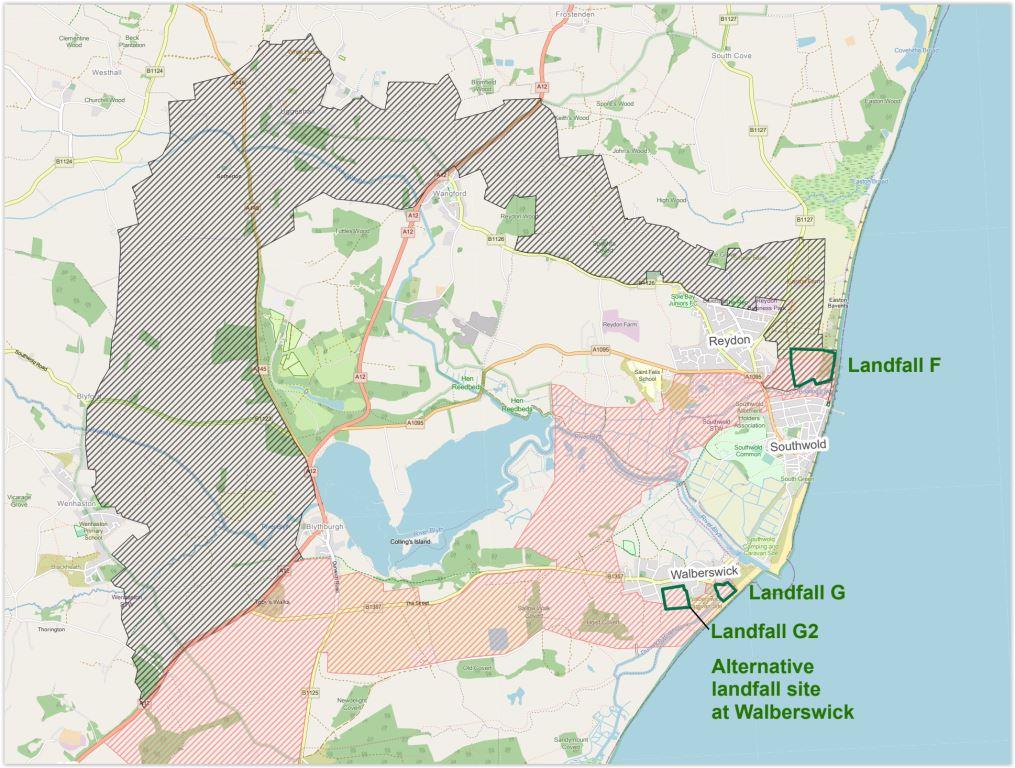
We appreciate Lionlink’s acknowledgement that following the feedback from the February statutory consultation, it has accepted that the G2 landfall location is inappropriate. It is with some satisfaction that the difficult, stressful and time-consuming work of the county, district and parish councils, campaign groups, and thousands of residents who digested and responded to the statutory consultation bore some fruit. What is upsetting and illogical, however, is that this realisation did not lead LL to go back to the beginning and work with NESO to identify an appropriate brownfield site for the British side of this Dutch-UK interconnector. Rather, it seems that, having boxed itself in with the outrageous choice of Walberswick in the first instance (having rejected all other locations for a myriad of different reasons all of which together apply in the case of Walberswick), LL is now suggesting that by moving a few hundred metres within the village for the 3rd time, it can somehow make it right. Of course, it cannot because Walberswick was never a viable option. Rather Walberswick was nothing more than a spot on a map where engineers, who had never set foot in Suffolk, happened to drop a pin. It is particularly irrational for LL to continue its pursuit of Walberswick given that, as an offshore hybrid asset, LL has wide flexibility on where it can be located. It is not enough for NGV to hide behind NESO. NGV needs to return to NESO and agree a new location. Otherwise, this private sector, profit-making project should not go forward.
A) Proposed Change to G3 landfall site: The detailed objections to the Walberswick landfall G2 were set out in our original consultation response. These remain unchanged. We reiterate the key concerns as they continue to apply to G3:
1) G3 is very much in the village. Just as LL misleadingly tried to label Manor Field (G2) as a location “south of the village”, it is patently untrue that G3 is “further out of the village” and we request that LL discontinue using such language in its literature and it press release to misleadingly suggest that the landfall has moved away from Walberswick. Specifically:
- There are village homes directly on 2 sides of the landfall site, with a number within extremely close proximity (within 100m of the landfall site).
- Scores of homes fall within 200m and we estimate that perhaps 2/3rds of village homes are within 500m of landfall. Walberswick’s Grade 1 listed church is barely 300m from G3.
- The population closest to the site include vulnerable people, elderly and children. A number of residents close to the site are already in their 80s and 90s. This means that unacceptable noise, vibration and light pollution impacts on people, especially from 24-7 drilling, remain. We should not have to point out yet again that Government Census 2021 data shows that:
- 43% of Walberswick residents are aged 65 or over, compared with 18.6% nationally.
- 35% of the village is aged 70+, far higher than both national and district averages.
- 11% are aged 85+, an exceptionally high proportion for any community.
This means Walberswick is not simply an “older than average” village as LL would describe it. It is a community with a concentration of residents who are more vulnerable to noise, vibration, disruption, anxiety, access changes, and construction‑related hazards and must receive special protection. We draw to LL’s attention that their desire to undertake HDD within the village and in such close proximity to homes is clearly a violation of Article 8 of the European Convention on Human Rights (ECHR). LL may try to argue that it has “improved” the situation with G3. Rather, we stress that its latest gamble on G3 simply proves the madness of G2 and can do nothing to establish the acceptability of the new option.
2) As detailed in our earlier submission, G3 remains adjacent to ecological sites that have the highest protection in the UK and Europe including the Minsmere–Walberswick SPA, SSSI, Ramsar site and SAC. These areas also provide some of the ecological mitigation from the harm caused by SZC including for the loss of Marsh Harrier habitat that the Secretary of State accepted in approving SZC. G3 is also within disturbance‑sensitive zones for protected species such as breeding nightjars. LL quite rightly confirms that G2 was inappropriate because of nearby bat populations. It will find the same for G3 -- Hoist Covert is a mere 80m away. Key reptile populations using surrounding grassland and field margins are also at clear risk from construction disturbance, lighting and vibration. Worryingly, HDD frack out risks to these protected European habitat sites remain and are increased, according to LL’s own estimates, because of the greater drilling distance. As with any site in Walberswick, there is no space for LL’s drilling to hide – on one side, hundreds of residents and many thousands of visitors, on the other, the most sensitive and protected habitats in the UK and Europe.
3) The parish of Walberswick is an eco-tourism mecca. Estimates of well over 100,000 visitors make use of Walberswick’s beautiful natural beaches year-round. As per our earlier consultation response, at least 150,000 walkers annually access the footpaths that criss-cross Walberswick and the protected sites including the newly completed King Charles III coastal path. One of the main paths connecting to this network lies exactly adjacent to G3. Footpath access connecting Walberswick to Blythburgh remains cut off by the cable route and haul roads. There is no escaping that the noise, dust, air and light pollution of the years of LL construction at landfall and cable route will destroy the tranquillity and the beauty of the entire Walberswick network. The contagion then spreads to the surrounding communities of Dunwich, Southwold, Reydon and Blythburgh that depend on Walberswick as the central connection point to all these vibrant eco-tourist destinations.
4) LL’s targeted consultation has done nothing to address one of the key factors that should have resulted in an early rejection of Walberswick as a possible landfall site. That is, Walberswick is almost like an island – there is only a single means to access the village and beach via the 4km journey down the narrow B1387. LL has acknowledged that it cannot access G3 via a haul road from the A12 or from the B1125 because Walberswick is encircled by SSSI and other protected sites. LL has acknowledged that the B1387 cannot carry its HGVs (much less its AILs) at the same time as other vehicles. Therefore, the sole access to the village for residents and the many tens of thousands of annual visitors who come in by car will be compromised for the duration of construction. This poses wholly unjustifiable risks to human health and safety and directly threatens Walberswick’s entire economic viability as the village’s sole access becomes constrained, congested and potentially dangerous for years. It would also seem extremely foolish from the perspective of LL’s own management of construction risks and timelines.
5) We also note that the ‘targeted consultation’ has proposed additional order limits around the B1387 from the A12 and at the B1125 junction. In doing so, LL seems unaware that these roadways are already under-going changes – including the closure of the B1125 going north – as part of the agreed SZC mitigation. This should prohibit any use of these routes for LL construction as this would threaten the access, safety and road management mitigation put in place for the SZC construction impacts just as SZC is expected to reach its peak construction period.
6) LL seems to have discarded any number of other potential landfall sites across Suffolk for access constraints far less serious than what Walberswick poses. G3 does absolutely nothing to change this situation. The obvious answer is that NO location in Walberswick is viable as it is impossible to access in a manner that does not unduly risk the health and well-being of its inhabitants and visitors, does not interfere with SZC mitigation, and that does not risk a vibrant Walberswick economy’s very existence.
B) Proposed Changes to Working Hours: We commented on proposed working hours in our original statutory consultation response. Those points remain. In addition, we would like to highlight the following:
1) LL and its sister, SeaLink, jointly proposed working 12 hours a day, 365 days a year, with additional hours provided for HDD. Such a proposal would never be acceptable and now that SeaLink has been forced to cut back, LL has done the same. We are glad that LL has at least acknowledged that the original proposals were a non-starter. However, there are still serious problems with the new proposals.
- First, as a private sector investment, whose profits are intended for NGV’s investors and not the public good, we can see no reason why LL should not be held to the normal working hours recommended by Suffolk County’s Department of Public Health (08:00 to 18:00 weekdays, 08:00 to 13:00 Saturdays).
- Second, LL has retained for itself the ability to break even its “reduced” hours (12 hours- a-day plus Saturday) and all of these “exemptions” will be exercised in Walberswick. In other words, in full knowledge that its landfall is located amidst homes where noise and disturbance will be acutely experienced, LL says it must be allowed to operate 24-7, with no respite, for all manner of activities associated with landfall including drilling, duct pulling, cable pulling and the like. Therefore, LL’s proposed “reduction” does nothing for the community of people, and the protected habitats, that will suffer the most.
- It cannot be any clearer that even with choosing a third site in Walberswick, LL cannot escape having a significant, negative night-time noise impact including on the elderly, children and vulnerable people living nearby. Despite claims to changes in your headline working hours, you are still proposing to work 24 hours a day within the village of Walberswick for periods stretching up to 10 days (or more if things don’t all go to plan). It remains our understanding that NGV have not undertaken any age‑specific assessment of construction impacts nor identified older residents as a vulnerable group much less proposed any tailored mitigation, communication methods or access arrangement. Planning policy, HSE guidance, and statutory nuisance legislation all require heightened protection for vulnerable groups, including older residents. Therefore, NGV have not demonstrated compliance with their Public Sector Equality Duty, and continue to fail in their legal obligations. We remind NGV again how serious this is given Walberswick’s demographic profile and that older people are more susceptible to the very impact that these prolonged working hours will cause including:
- Sleep disturbance and cardiovascular stress from continuous drilling noise
- Anxiety and confusion caused by prolonged disruption
- Increased risk of falls or isolation if footpaths or access routes are altered
- Difficulty navigating construction traffic, uneven surfaces, or diversions
- Reduced ability to evacuate quickly in the event of an incident
C) Proposed changes at the Benhall Bridge: We commented on this in our initial consultation response and our views are unchanged. In addition, we would like to highlight the following:
- As raised at the Sealink hearings, a superior northern route, proposed by Suffolk County offered a sensible compromise that would drastically reduce the impact on the immediate communities along the Benhall Bridge route, negate the need for the ecologically damaging Fromus River crossing, and would spare the disruption and risks to commuter and SZC rail that crosses under the Benhall railway bridge. LL had an opportunity to improve on SeaLink’s proposal by pursuing the northern option. Instead, LL has followed along with the intransience of its SeaLink sister, rather than acting responsibly – particularly as a private sector, profit-making entity -- by working with the County and other stakeholders to make the northern route possible. At the SeaLink hearings, NG tried to argue that the problem was one of land acquisition. LL in its statements seems to be trying a different argument that IT knows better than the County and District Councils, Parish Councils and the people who will have to live with these converter and substations about what option is preferable for them. It is also risible that LL states in its EIC that the northern route is less good because it is some 2.5km longer. Given that it is choosing a ridiculously long and damaging onshore green-field cable route by making landfall in Walberswick, it is not believable that a slightly longer haul road should be a determinate. Moreover, as we have seen from SZC construction, far more construction traffic is coming from the north then originally predicted. Therefore, there can be no argument that the northern or the Benhall bridge route is “shorter”. Possible arguments about contamination at the disused airfield likewise provide inadequate justification for its exclusion given that operating in such environments is not unusual at any brownfield site and offers no challenges to experienced contractors. Neither the arguments of SeaLink nor LL hold up to scrutiny and LL, if landing in Suffolk, must along with SeaLink, use the northern route so as to reliably lessen the impact on local communities.
D) Consultation Process: Targeted consultation period and approach
- We would like to record how unacceptable it is for NGV to drop this “targeted consultation” on the local community with no warning and with the barest legal requirement of 28 days. To do so at the start of the summer holiday, when children are out of school and families trying to go on holidays, is particularly unconscionable. We appreciate that a long-planned meeting between LL staff and the Walberswick Parish Council coincidentally fell during this period, but this was simply serendipity and 28 days is insufficient under these conditions. We calculate that this is our 6th consultation (statutory and non-statutory) with Lionlink and we resent the cavalier approach. Each time, LL moves the goal posts (with 3 different locations in Walberswick, for example) and we find this to be grossly unjust. How many more times is NGV going to come back to take a bite out of Walberswick?
In conclusion, there is nothing offered in this targeted consultation to change the overwhelming objections to the Lionlink proposal. Walberswick can never be made an acceptable landfall site. It is disgraceful that NGV continues to threaten the people of Walberswick (and waste the resources of its investors) with their quixotic quest to make landfall here. There is absolutely no compelling reason why LL should be in this location and therefore no justification for the unacceptable impacts on people, on a vibrant and thriving economy, and on protected habitats and natural beauty that is beloved by hundreds of thousands of visitors from across the country. Lionlink, as a private sector investment, needs to work with NESO to identify a connection through an existing brownfield site. Most obvious is to follow Nautilus and BritNed to Isle of Grain or similar site. If LL and NESO cannot agree to this, then LL must not go forward until an appropriate location is identified. The Dutch side of LL appears to be acting responsibly in using off-shore and brownfield. It should be mandatory that the UK side of the investment does the same.
Walberswick Parish Council