- Screen Colours:
- Normal
- Black & Yellow
A lot of of the Charity’s work is dedicated to the management and conservation of some 170 acres of wonderful landscape around Walberswick village.
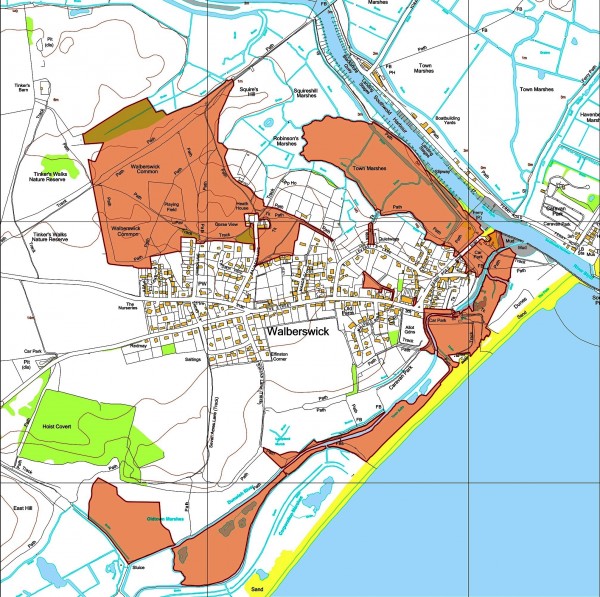
Much of this is focused on the Common - the large NW area shown in red on the map below - but all of the Charity's land is actively looked after.
ES Update March 2026
Bennett's Copse
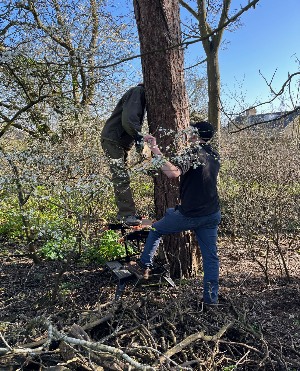 Putting up a Blue Tit bird box on a Scots Pine in Bennetts Copse
Tucked away behind The Street is a piece of WCLC land called Bennetts Copse. It is a beautiful glade in Spring and in early March the National Landscape Volunteers came into the Village to carry out a series of Stewardship tasks.
The organisation is part funded by DEFRA and part by SCC and its’ remit is to enhance and protect areas of outstanding natural beauty; this includes a volunteer action group who are out many weeks of the year.
On a classic bright spring day it was a real pleasure to be in Bennetts Copse where the volunteers cleared and laid a glade footpath, planted 180 native species hedging plants, planted 9 young oak trees, completed a Tree survey, and constructed and put up 4 bird boxes. Real impact!
Vanessa Tucker
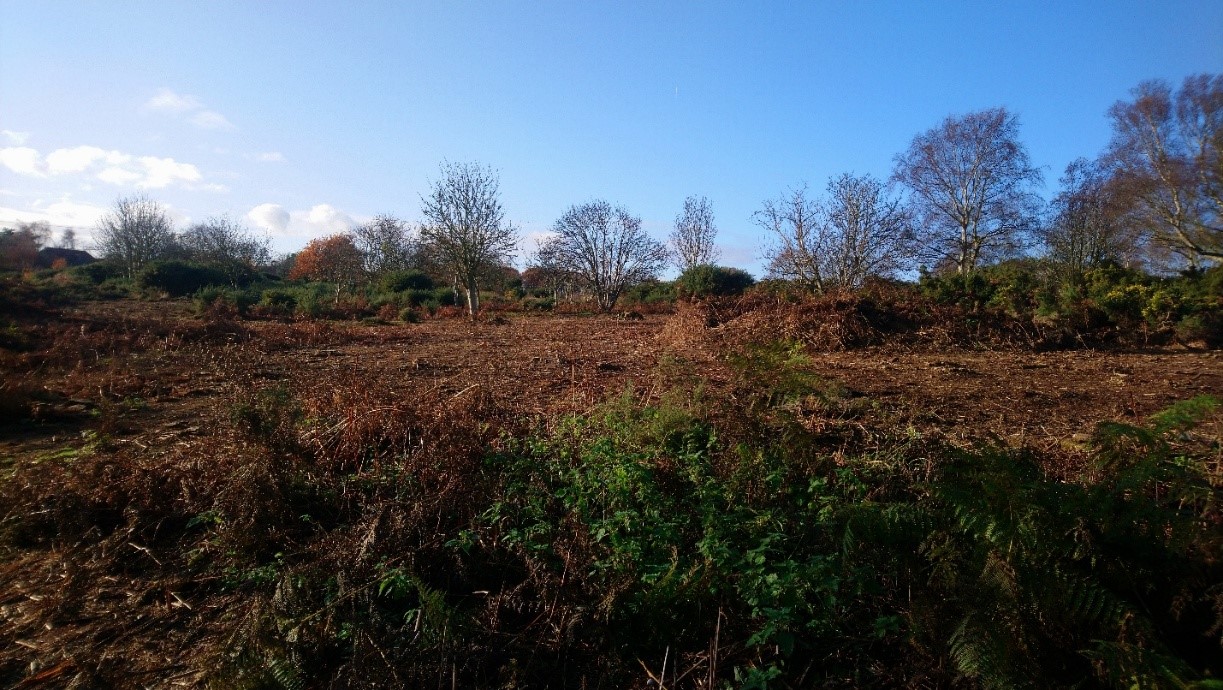
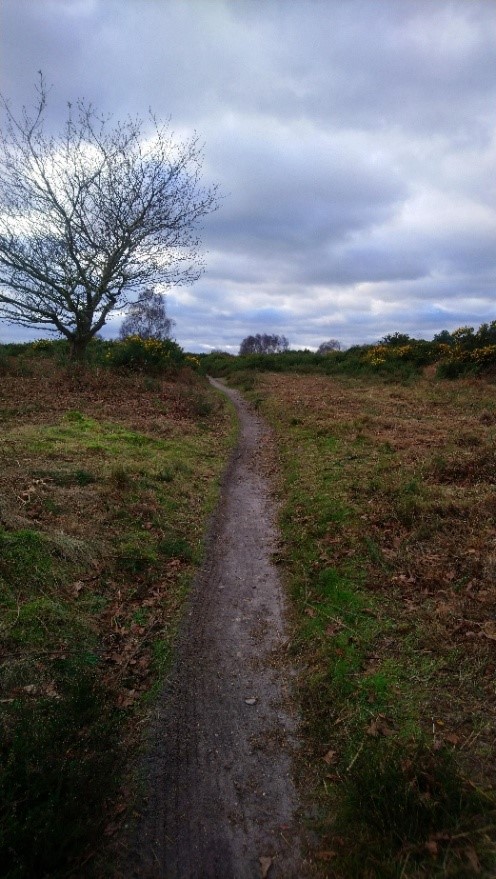
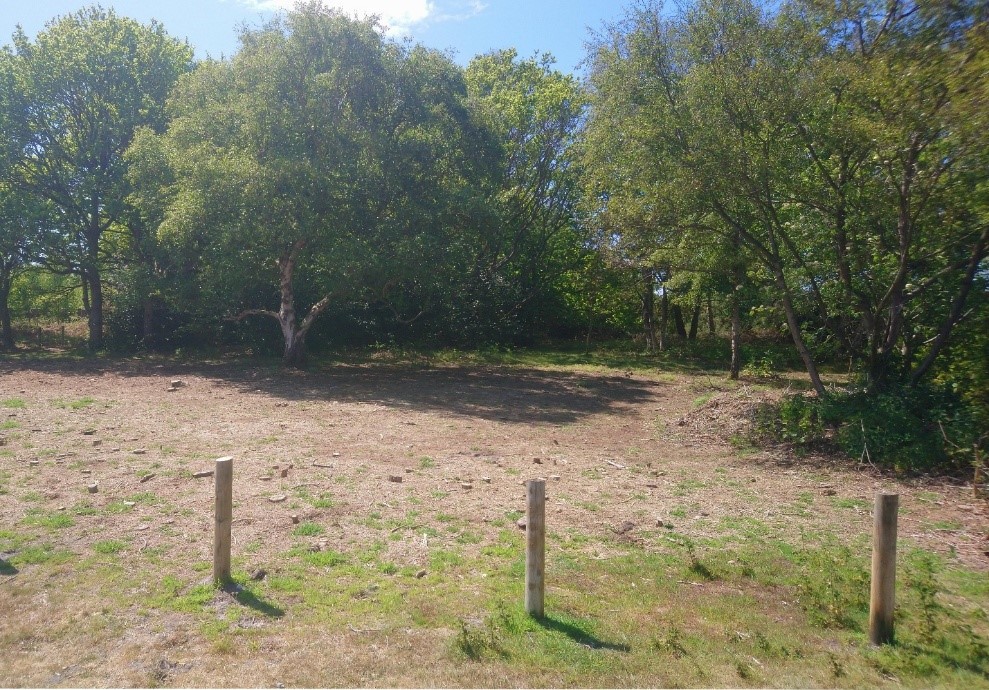
For well over 15 years we have worked in partnership with Natural England under a Countryside Stewardship Agreement, renewed from January 2024. This agreement ensures that the Charity is able to continue its environmental work until at least 2028.
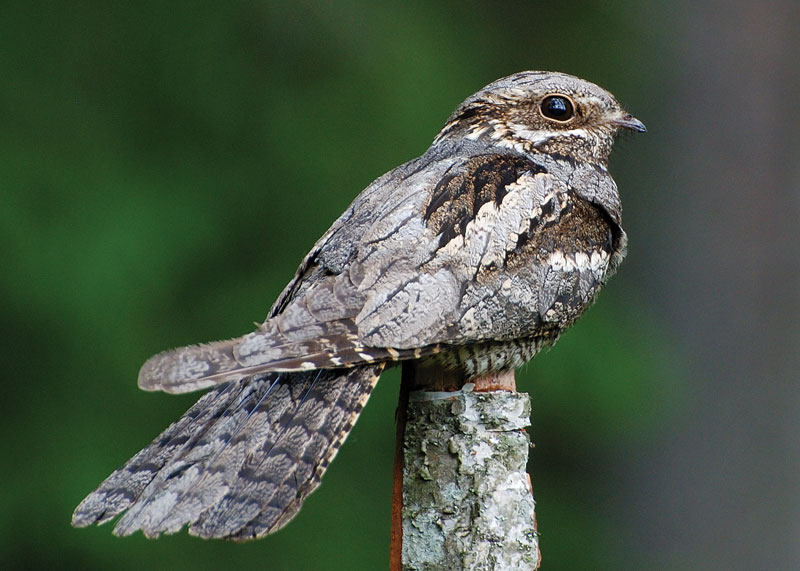
The vast majority of this work is devoted to improving the diversity of habitat on the Common. Our aim here is to provide a mosaic of vegetation which allows all heathland features to flourish, including pioneer heath and bare ground which benefits rarer invertebrates, birds, reptiles and plants. In recent years, nightjars and nightingales returned to the Common and there have been at least five calling male nightjars - an unusual and distinctive churring trill.
If cattle or sheep were able to roam freely across the Common as they did many years ago, the more invasive species would be kept in check and a greater diversity of vegetation maintained. But nowadays the number of walkers with dogs would mean that any livestock would have to be fenced in. That would then destroy the free-roaming, unenclosed nature of the landscape which is the essence of a Common.